


In 2025, the number of travelers that find your hotel in a OTA or booking platform is increasing significantly. According to Perk and other hospitality industry leaders, over 55% of travelers will search for your website after seeing your hotel listed on a booking platform.
Your potential customers use booking platforms to get a first glance on the hotels in the area they'd like to accommodate in, finding a variety of options to choose from. Once they find yours, they search for your website directly in search engines like Google, or even AI platforms like Chat GPT to get a better overview of the place they will be staying at.
Your hotel website is your most profitable sales channel, so you need to ensure it's easy nice-looking, well optimized for search engines, offers a great user experience and has a smooth, friction-less booking process.
This article is a sneak peak of what you'll find in our new WhitePaper: "The Independent Hotel Success Guide".
We will cover the following topics:
- Why most hotel websites don't convert
- What makes websites actually convert
- Content that sells the experience
- Give them a reason to book direct
Let's dive in:
Why Most Hotel Websites Don't Convert
Most common issues from hotel websites that independent hoteliers face in 2025:
- You can't update your website on your own.
- The website doesn't have an integrated booking engine, or it's not good enough to satisfy your business needs.
- Your prices are static, and do not adapt to seasonality, local events or your close competitors.
- Your website prices are matching exactly the same ones that are displayed in the OTAs.
- It's not mobile-optimized and responsive.
- You're manually updating the occupancy in your calendars.
You need to address these issues and improve your hotel website's overall user experience, which will increase the amount of direct bookings you currently receive.

What Makes Websites Actually Convert
How does the ideal hotel website looks like?
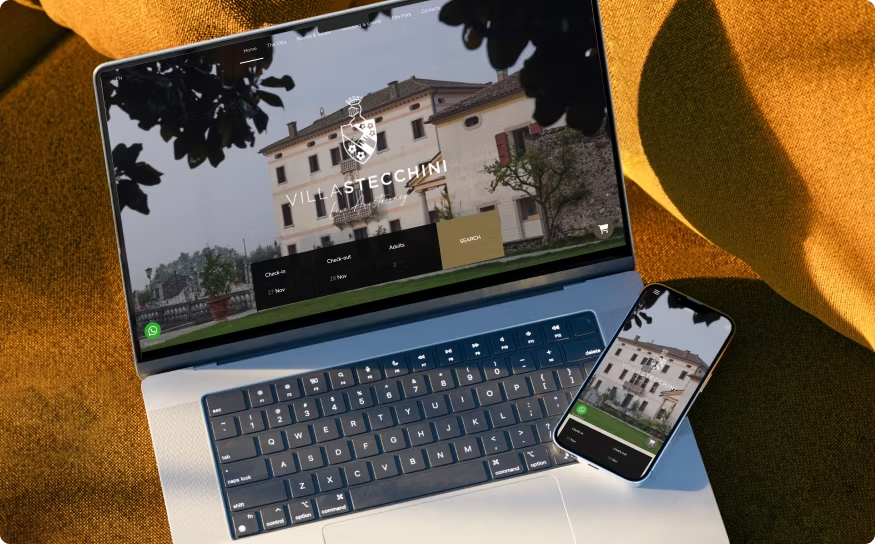
1. A Website That Your Can Actually Update Yourself
- Change photos at anytime
- Update room prices in minutes
- Add special offers
- Edit text and descriptions in real-time
2. Mobile-First Design
According to Hotel Speak, 51.3% of bookings in the UK are made in mobile vs. desktop, which represents a 6.1% increase from the previous period.
What mobile-first actually means, and why it matters to your website?
- Readable text without zooming
- Big enough buttons (for accessibility)
- Images are well-compressed and load quickly
- Smooth booking process so travelers can book on-the-go, or even in emergency situations.
- Easy to fill forms
3. Integrated Booking Engine
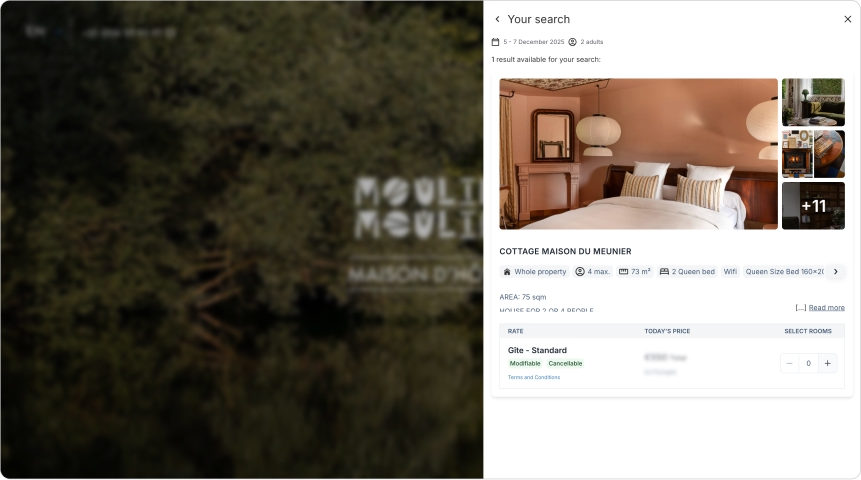
The Booking Engine must be an extension of your hotel website, not an external tool or widget that navigates the customer to a different page.
Some of the benefits of having a Booking Engine are:
- Users spend more time on your website
- Design matches your branded style
- Intuitive calendar that shows real-time availability
- Transparent pricing
- Works smoothly on mobile
- Guests don't need to create a new account
4. Sync Across All Channels Automatically
Another typical issue independent hoteliers face is updating different channels across different platforms manually.
Having a calendar that automates your bookings & occupancy in real-time across multiple platforms is efficient and time-saving, helping you skip manual work, avoid human errors and eliminate the risk of overbookings.
This matters to your website because you'll offer a better, smoother user experience to your guests by showing accurate availability.
5. Dynamic Pricing (Real-Time Price Updates)
One way you can maximize your Revenue per Available Room (RevPAR) of your most profitable sales channel, is by using dynamic pricing solutions that are directly integrated into your website, like the DynamicPricing tool from Amenitiz.
Our practical & easy-to-use tool helps you with adjust prices based on:
- Seasonality
- Local events, festivals
- Demand
- Length of stay
- Special promotions
Having an integrated Booking Engine that has real-time dynamic pricing adjustments will help your website provide guests with real-time pricing and availability information, while maximizing the revenue of every room offered in your website, leading to an increase of bookings.
Content That Sells the Experience
Your website's content is your shopping window. You need to give reasons to travelers to book your room, instead of the competitor's.
How to achieve that?:
- Show what guests see when they're there
- Capture the details guests care about
- Include small signs of life
- Show what's included
- Prove location claims
Give Them A Reason To Book Direct
Give your guests a strong reason to keep navigating your website instead of going back to the booking platform.
- Why incentives matter: your guests feel comfortable when booking a room directly on booking platforms. Make sure the small perks they get when booking in your website make the difference to them.
- Direct Booking incentives that actually work:
- Free upgrades
- Flexible cancellation
- Welcome amenity
- Best rate guarantee
- Exclusive packages
- Early check-in, late check-out
Final Thoughts About Turning Your Hotel Website Into A Sales Channel
Managing an independent hotel in 2025 is not a piece of cake, it takes hours of dedication, juggling multiple tasks, managing bookings in different OTAs and booking platforms, synchronizing calendars, improving website experience and many other manual tasks.
That's why at Amenitiz we have created this dedicated free piece of content; "The Independent Hotel Success Guide". We understand that independent hotel owners struggle in their daily life and we love being able to help, and provide modern and easy-to-use solutions that makes the job easier.
If you'd like to read the complete step-by-step guide about "Sales Channel Strategies: Turning Your Hotel Website Into A Sales Channel", you can download the free document on the left side of the article.
Thanks for reading!