
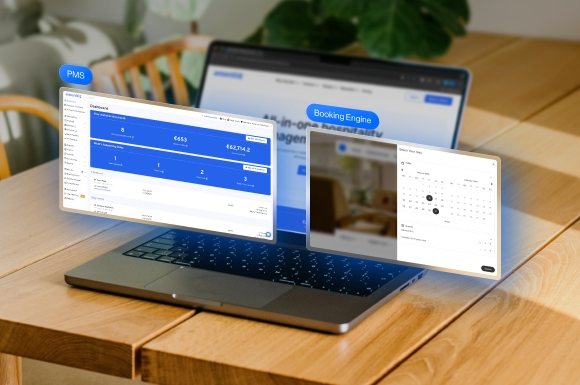

Choosing hotel technology can feel overwhelming when you're trying to understand which software and tools you actually need to run your hotel business.
Two terms constantly appear in hospitality discussions: hotel PMS and booking engine. While both are essential for your daily hotel operations, they serve fundamentally different purposes.
Understanding the distinction between an hotel property management system and an hotel booking engine helps you make smarter technology investments. This guide clarifies what each system does, how they differ, and why both are crucial for independent hotels across the UK and Europe.
Learn everything you need to know about how hotel PMS work by reading out complete article: Property Management Software: The Ultimate Guide.
Quick answer: hotel PMS vs. booking engine
The Core Difference
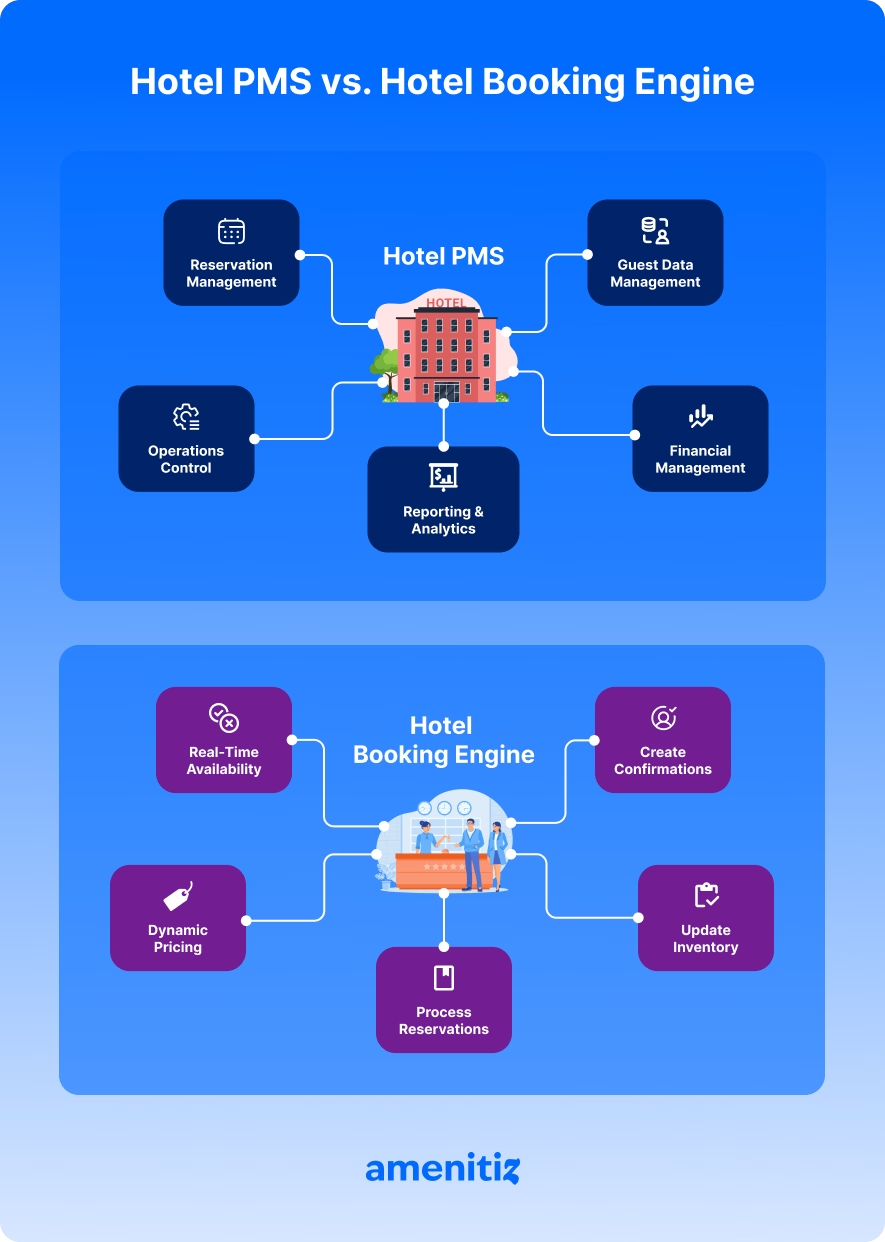
An Hotel PMS is a back-office operations system that manages your entire hotel internally. Controls reservations, guest data, housekeeping, billing, and reporting. Think of it as your hotel's central nervous system.
Customer-facing booking tool that captures direct reservations from your website. Displays availability, processes payments, and sends confirmations. Think of it as your digital front desk.
What is an hotel PMS?
A hotel property management system (hotel PMS) is comprehensive management software that controls your hotel's internal operations. This computerized reservation and management platform handles everything from check-ins to financial reporting.
Hotel PMS: meaning and core functions
The hotel PMS meaning refers to the centralized system that manages:
Reservation management
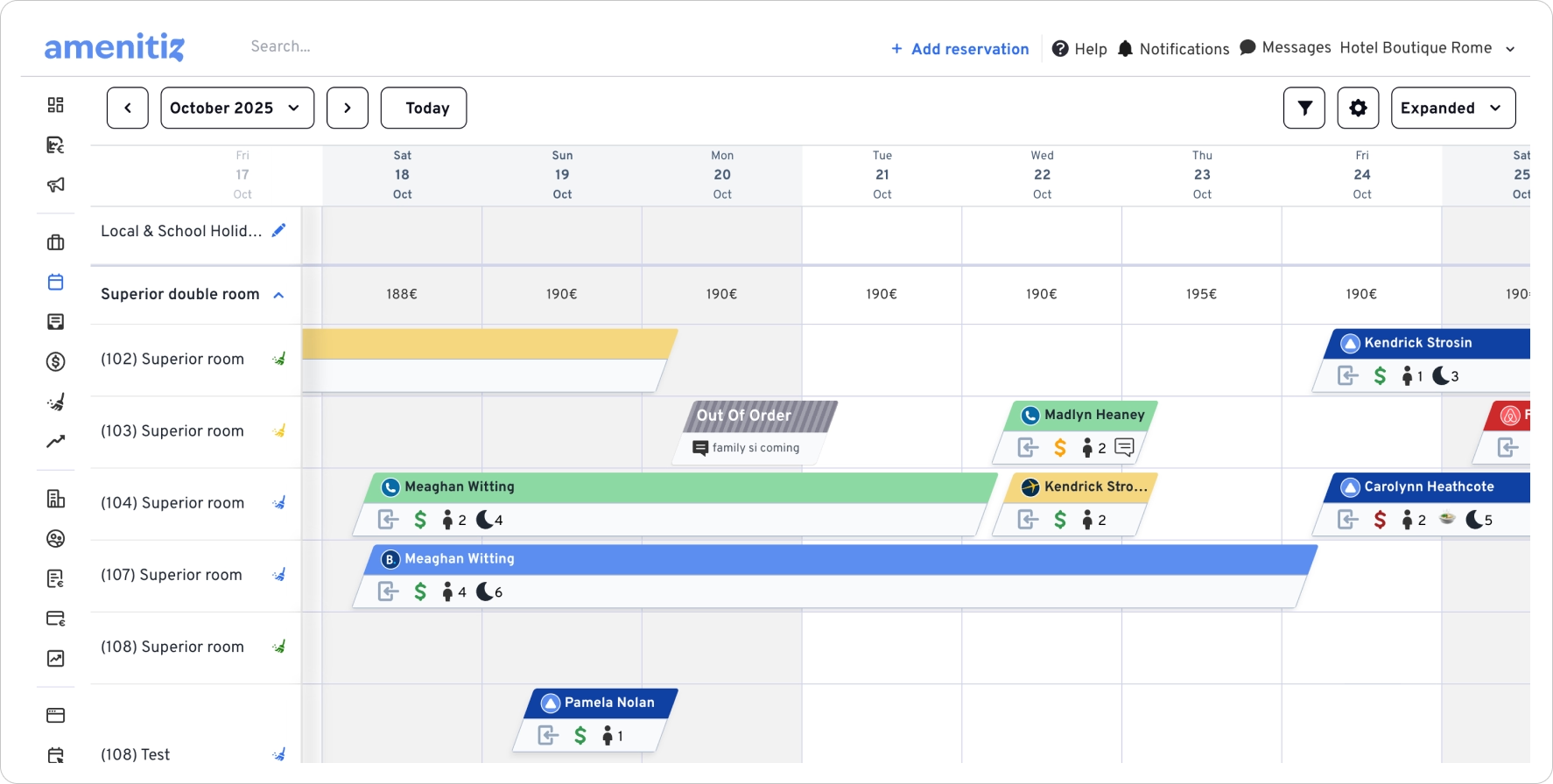
- Processes all bookings that happen in your hotel: phone, walk-in, online OTAs, directly from the website, and so on
- It gives visibility of the big picture of your master reservation calendar
- Manages the room inventory and availability for all rooms
- Handles reservation modifications and cancellations, so you're always updated in real time
Guest data management
- Stores comprehensive guest profiles
- Tracks booking history and preferences
- Manages loyalty program information
- Maintains communication records
Operations control
- Coordinates housekeeping schedules
- Manages room assignments
- Tracks maintenance requests
- Controls check-in/check-out processes
Financial management
- Generates invoices and folios
- Processes payments and refunds
- Produces financial reports
- Integrates with accounting systems
Reporting and analytics
- Occupancy rate tracking
- Revenue per available room (RevPAR) analysis
- Channel performance metrics
- Forecasting and demand patterns
According to Hotel Tech Report's 2026 research, 89% of independent hotels now use cloud-based hotel PMS systems rather than traditional on-premise solutions.
What is an hotel booking engine?
A hotel booking engine is customer-facing software that enables guests to book rooms directly through your hotel website. This online hotel booking engine displays real-time availability, processes secure payments, and generates instant confirmations.
How hotel booking engines work
The best hotel booking engine connects directly to your hotel PMS system to:
- Display real-time availability: Queries the PMS for current room inventory
- Show dynamic pricing: Pulls rates from your hotel property management software
- Process reservations: Captures guest information and payment details
- Create confirmations: Sends automated booking confirmations via email
- Update inventory: Communicates completed bookings back to the PMS
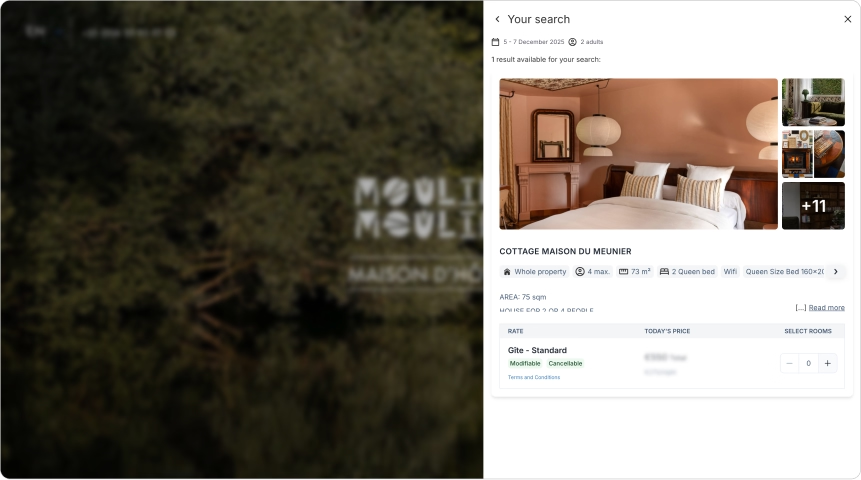
The booking engine hotel interface typically includes:
- Visual room selection with photos and descriptions
- Date picker with availability calendar
- Rate comparison across room types
- Secure payment gateway integration
- Mobile-responsive design
- Multi-language support
- Special offers and promotional codes
Hotel PMS vs. hotel booking engine: detailed comparison
| Feature | Hotel PMS | Booking Engine |
|---|---|---|
| Primary User | Hotel staff (internal) | Guests (external) |
| Main Purpose | Manage hotel operations | Capture direct bookings |
| Access Point | Back-office system | Hotel website |
| Key Functions | Reservations, housekeeping, billing, reporting | Room display, availability search, payment processing |
| Integration Needs | Channel manager, accounting, payment gateway | Must connect to PMS for inventory |
| Revenue Impact | Operational efficiency, data insights | Commission-free direct bookings |
| Can Work Alone? | Yes (but limited direct booking capability) | No (requires PMS for inventory) |
How does the hotel PMS and booking engine work together?
The best hotel pms systems integrate seamlessly with booking engines to create a powerful revenue-generating ecosystem. Here's the workflow:
The integration process
Step 1: Inventory synchronization
- Hotel PMS maintains master room inventory
- Booking engine queries PMS for real-time availability
- Updates happen instantly (within seconds)
Step 2: Guest makes a reservation
- Guest selects dates on booking engine hotel interface
- Booking engine displays available rooms from PMS
- Guest completes booking and payment
Step 3: Reservation is automatically created
- The booking engine sends the reservation to the hotel property management system
- The PMS creates a new guest profile and the reservation record
- Room inventory automatically updates across all channels
Step 4: Confirmation and communication
- PMS triggers an automated confirmation email
- Guest receives booking details and payment receipt
- Hotel staff can view new reservation immediately
Step 5: Ongoing management
- Hotel staff manage reservation through hotel PMS software after being trained on how to efficiently use the software
- Any modifications are updated in real-time
- Check-in/check-out processed through PMS
This integration between hotel PMS and booking engines prevents double bookings and ensure consistent availability across all booking channels (including direct bookings from your website and from the Online Travel Agencies (OTAs) or other integrated channels.
Best hotel PMS software for independent hotels
Selecting the best hotel PMS systems depends on your property size, budget, and technical requirements. Here are top considerations for hotels based in Europe:
Cloud-based hotel PMS shortlist
Amenitiz (All-in-One Solution) for Independent Hotels
- Integrated property management software (hotel PMS)
- Built-in booking engine and channel manager
- Designed for independent hotels needs
- Transparent pricing with no hidden fees
- Full GDPR compliance for UK and European properties
Other leading hotel PMS software
- Cloudbeds: Comprehensive cloud hotel PMS
- Mews: Modern hotel property management software
- Little Hotelier: Software hotel PMS for independent properties
Essential PMS features every independent hotelier should look for
When evaluating cloud-based hotel PMS software, prioritize:
- Integrated booking engine: Eliminates need for separate systems
- Channel manager integration: Synchronizes with OTAs automatically
- Mobile access: Manage operations from smartphones
- Payment processing: Built-in secure payment gateway
- Reporting dashboard: Real-time performance metrics
- Customer support: Customer service in your timezone
- GDPR compliance: Essential for European operations
According to G2's hotel management category, integration capabilities rank as the #1 factor in hotel PMS software selection.
Best hotel booking engine features
The best booking engine for hotels includes these critical capabilities:
Must-have booking engine features
User experience
- Mobile-responsive design (60%+ bookings happen on mobile)
- Fast loading speeds (under 3 seconds)
- Visual room selection with high-quality photos
- Clear pricing without hidden fees
- Guest review integration
Technical capabilities
- Real-time PMS synchronization
- Secure payment processing (PCI-DSS compliant)
- Multi-currency support
- Multi-language options for international guests
- SSL encryption for data security
Revenue optimization
- Upselling tools (room upgrades, add-ons)
- Promotional code functionality
- Special offers display
- Rate parity management
- Abandoned booking recovery
Conversion features
- Urgency messaging ("Only 2 rooms left")
- Social proof (recent bookings, reviews)
- Trust badges and security seals
- Flexible cancellation policy display
- One-click booking for returning guests
Research from Capterra's booking engine category shows that hotels with optimized booking engines increase direct bookings by 25-40% within the first year.
Hotel PMS and channel manager integration
Modern hotel property management systems integrate with channel managers to distribute inventory across multiple platforms. This hotel PMS and channel manager relationship is crucial for maximizing occupancy.
Channel manager functions
A hotel channel manager:
- Connects to 120+ OTAs (Booking.com, Expedia, Airbnb)
- Updates availability across all channels instantly
- Synchronizes rates and restrictions
- Prevents overbookings through real-time inventory management
- Centralizes reservation intake from all sources
Integration Flow: Hotel PMS → Channel Manager → OTAs/Booking Platforms → Guest Bookings → Back to PMS
Amenitiz's integrated platform combines hotel PMS, booking engine, and channel manager in one system, simplifying technology management for independent hotels.
Cost comparison: hotel PMS vs. booking engine
Understanding pricing structures helps you budget appropriately for hotel technology investments.
| System Type | Typical Cost Range | What's Included |
|---|---|---|
| Standalone Hotel PMS | £75-£250/month Small properties | Reservation management, guest profiles, housekeeping, reporting |
| Standalone Booking Engine | £30-£100/month Or commission per booking | Website integration, payment processing, confirmation emails |
| Integrated PMS + Booking Engine | £80-£200/month All-in-one solution | Complete hotel management, direct bookings, channel manager |
| Enterprise Hotel PMS Systems | £500-£2,000+/month Large properties | Full suite, advanced reporting, multi-property management |
Hotel PMS & booking engine implementation best practices
Successfully implementing hotel PMS systems and booking engines requires strategic planning:
Implementation timeline
Week 1-2: planning and configuration
- System setup and customization
- Room types, rates, and policies configuration
- Staff account creation and permissions
Week 3-4: data migration and integration
- Import existing reservation data
- Connect booking engine to PMS
- Integrate channel manager and payment gateway
- Set up automated email templates
Week 5-6: testing and training
- Test booking flows end-to-end
- Train staff on hotel property management system
- Run parallel systems during transition
- Address any technical issues
Week 7: go-live!
- Switch to new hotel PMS software completely
- Monitor systems closely
- Provide hands-on support for staff