

Running an independent hotel means wearing multiple hats: you're the manager, the front desk, sometimes even the maintenance crew.
When Sarah opened her 12-room boutique hotel in Bath, she spent the first year juggling spreadsheets, dealing with double bookings, and manually updating rates across five different booking platforms. "I was working 14-hour days just to keep up with admin tasks," she recalls. "I barely had time to actually talk to my guests."
Sarah's story isn't unique. These situations are common among independent hotel owners that haven't adopted hotel technology yet.
Here is when a hotel PMS (property management software) comes in handy: according to Hotel Tech Report's 2026 survey, 89% of independent hoteliers save 2-10+ hours per week using a PMS. 17% save more than 10 hours weekly (500+ hours annually per property).
But here's the challenge: not all PMS platforms are created equal. While large hotel chains need complex systems with enterprise features, independent hotels need something different, powerful enough to compete with the chains, but simple enough to use without a dedicated IT team.
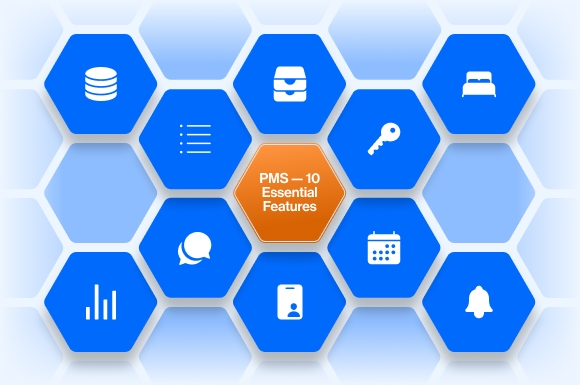
This guide walks you through the 10 essential features your PMS must have to run a successful independent hotel in 2026.
Let's dive in:
1. Real-Time Multi-Channel Inventory Management
Your rooms should never be listed as available on Booking.com when they're already booked through your website. Yet this happens more often than you'd think.
What it does: Real-time inventory management automatically updates room availability across all your sales channels the moment a booking is made: whether it comes from your website (direct booking), Booking.com, Airbnb, Expedia, (OTAs) or a phone reservation.
Why it matters: according to Booking.com Partner Help Center, 25% of hotel partners experience a double booking during their first year on Booking.com's platform.
What to look for: Your PMS should sync inventory in under 30 seconds across all channels. Any longer and you risk overlaps during high-demand periods.
Real example: A 15-room guesthouse in Cornwall eliminated all double bookings after implementing automated inventory sync, reducing guest complaints by 85% in their first quarter.
2. Integrated Channel Manager
Managing rates and availability across multiple OTAs manually is like trying to conduct an orchestra while playing every instrument yourself.
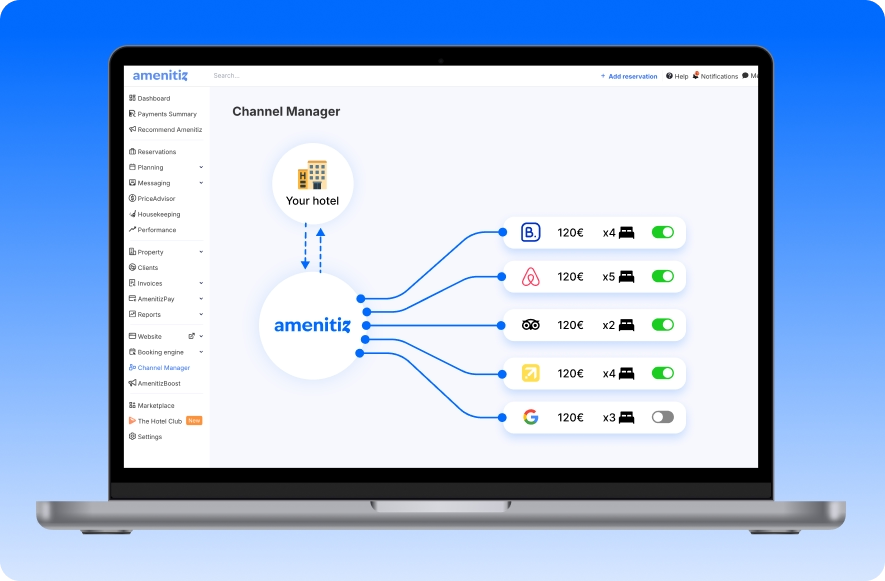
What it does: A built-in channel manager connects your PMS directly to 120+ Online Travel Agencies (OTAs) like Booking.com, Expedia, and Airbnb, letting you update all platforms from one dashboard.
Why it matters: Hotels using integrated channel management see an average 23% increase in bookings, according to data from GuestPoint. You're visible where guests are searching, without the manual work.
What to look for:
- Direct connections to major OTAs (not just indirect through third parties)
- Two-way sync for bookings, rates, and availability
- Instant updates (not batch processing that creates delays)
Cost savings: Hotels that eliminate standalone channel manager subscriptions save €80-150 monthly by using integrated systems.
3. Commission-Free Booking Engine
Every booking through an OTA costs you 15-25% in commission. Your own website should be your most profitable sales channel.
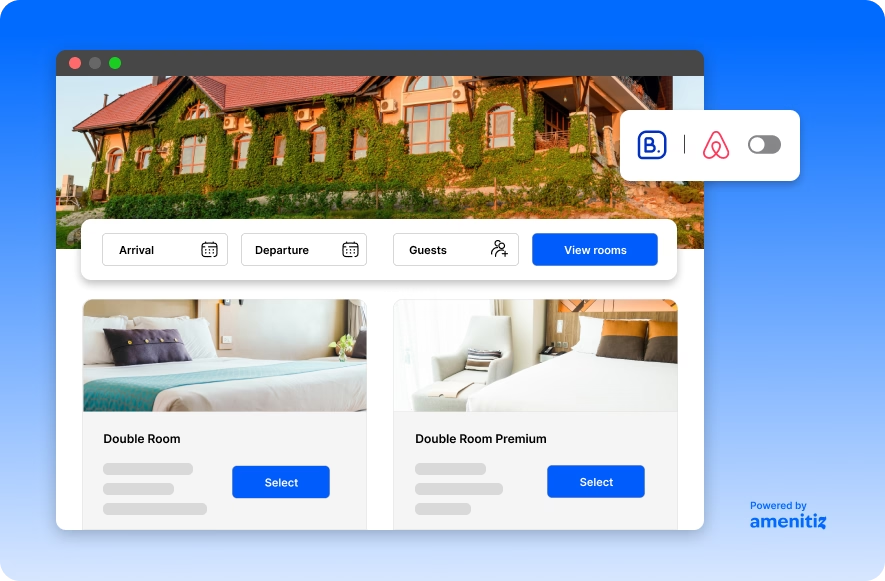
What it does: An integrated booking engine lets guests book directly on your website without commission fees. The booking automatically flows into your PMS, updating all other channels.
Why it matters: Reducing OTA dependence by just 20% can increase profit margins by €8,000-15,000 annually for a 20-room hotel, based on Hospitality Net's 2024 independent hotel benchmarking data.
What to look for:
- Mobile-responsive design (67% of hotel bookings start on mobile devices)
- Maximum 3-click booking process
- Real-time availability and pricing
- Guest reviews and photos integrated
- Secure payment processing
Pro tip: Hotels with booking engines that match their website design see 34% higher conversion rates than those using generic booking pages, according to Hotel Tech Report research.
4. Automated Guest Communication
Guests expect fast responses. But you can't be at your desk 24/7.
What it does: Automated messaging sends booking confirmations, pre-arrival instructions, check-in details, and post-stay thank-you messages without manual work.
Why it matters: Hospitality Net's data shows that 78% of hotel review mentions cite communication speed. Quick, clear communication directly impacts your online reputation and future bookings.
What to look for:
- Customizable email templates
- Automated triggers (booking confirmation, 24 hours before arrival, post-checkout)
- Multi-language support
- SMS/WhatsApp integration options
Time saved: Properties report saving 6-8 hours weekly on guest emails after implementing automated communication.
Related read: Property Management Software: The Ultimate Guide
5. Integrated Payment Processing
Chasing payments and manually reconciling transactions eats up time and creates errors.
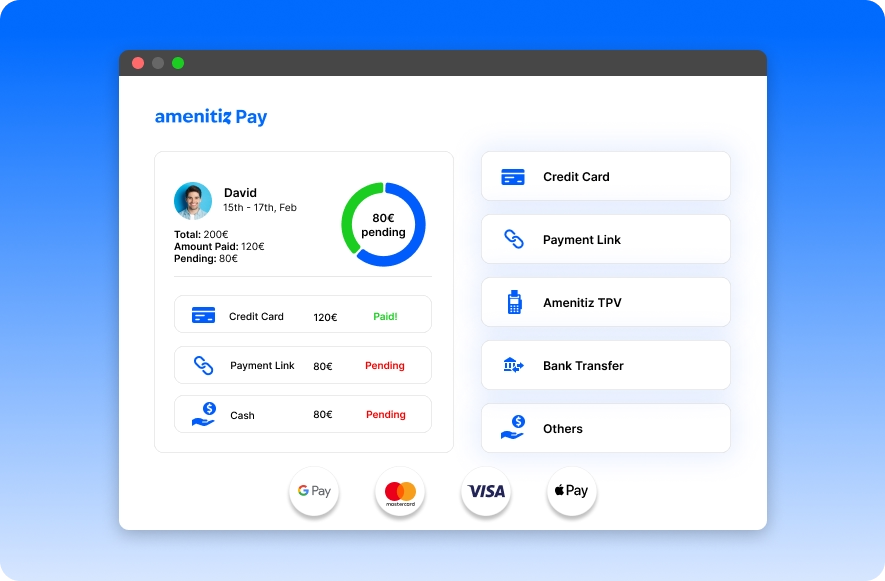
What it does: Integrated payment processing like AmenitizPay handles deposits, full payments, and refunds directly within your PMS. Guests can pay online, by terminal, or via payment links.
Why it matters: Manual payment processing has an error rate of 1-3%, while integrated systems reduce this to under 0.1%, according to payment processing industry data. For a hotel processing €200,000 annually, that's €2,000-6,000 in prevented errors and chargebacks.
What to look for:
- PCI-DSS compliance (non-negotiable for security)
- Multiple payment methods (cards, digital wallets, bank transfers)
- Automated payment reminders
- Direct settlement to your bank account
- Low transaction fees
Cash flow impact: Hotels using integrated payment systems receive funds 2-3 days faster than those using manual processing, improving working capital.
6. Housekeeping Management & Room Status
Your housekeeping team needs to know which rooms to clean, and you need to know which rooms are ready to sell.
What it does: Digital housekeeping management assigns cleaning tasks, tracks room status (dirty, clean, inspected, maintenance needed), and notifies front desk when rooms are ready.
Why it matters: Real-time room status prevents selling dirty rooms and maximizes inventory. Hotels using digital housekeeping systems can sell rooms 45 minutes faster on average.
What to look for:
- Mobile app for housekeeping staff
- Task prioritization based on arrivals
- Maintenance request tracking
- Visual dashboard showing room status
- Completion time tracking
Efficiency gain: Properties report 30% faster room turnover times after digitizing housekeeping workflows.
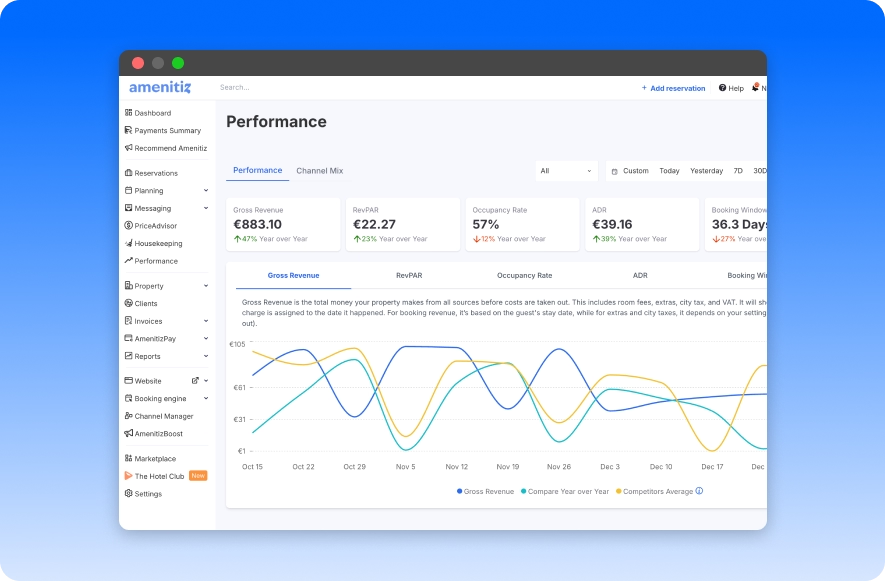
7. Revenue Management & Reporting Dashboard
You can't improve what you don't measure. But spreadsheets don't give you the full picture in real-time.
What it does: A built-in dashboard shows your key performance metrics: occupancy rates, Average Daily Rate (ADR), Revenue Per Available Room (RevPAR), booking sources, and revenue trends.
Why it matters: According to Hospitality Financial and Technology Professionals (HFTP), hotels that review daily performance dashboards make pricing adjustments 3x more frequently and achieve 8-12% higher RevPAR than those relying on weekly or monthly reports.
What to look for:
- Daily, weekly, monthly, and annual views
- Comparison to previous periods
- Channel performance breakdown
- Booking pace and pickup reports
- Forecast occupancy
- Exportable data for accountants
Decision-making impact: Having real-time data helps you spot trends immediately, if a local event is driving demand, you can adjust rates before competitors.
8. Dynamic Pricing Recommendations
Setting the right price for each night is one of your biggest revenue opportunities. But doing it manually based on gut feeling leaves money on the table.
What it does: Dynamic pricing tools like PriceAdvisor analyze local demand, competitor rates, events, seasonality, and your historical data to recommend optimal prices for each room type and date.
Why it matters: Hotels using dynamic pricing achieve 15-20% higher annual revenue compared to those using static seasonal pricing, according to Hotel Tech Report's hotel revenue management report.
What to look for:
- Competitor rate tracking in your area
- Local event calendars
- Occupancy-based recommendations
- Easy price adjustments (one-click or auto-accept)
- Minimum rate protections
Reality check: While large chains use complex revenue management systems costing thousands monthly, independent hotels need simpler tools that deliver 80% of the benefits at affordable prices.
9. Guest Database & CRM
A returning guest is worth 3-5x more than a new one. But only if you remember them.
What it does: Your PMS stores complete guest profiles, contact information, booking history, preferences, special requests, and notes from previous stays.
Why it matters: Personalized service drives loyalty. Amadeus 2024 hospitality report found that 64% of guests are more likely to return to hotels that remember their preferences.
What to look for:
- Automatic profile creation from bookings
- Notes and preferences tracking
- Booking history visible at check-in
- Marketing consent management (GDPR-compliant)
- Segmentation for targeted offers
Revenue opportunity: A 20-room hotel with a 15% repeat guest rate generates approximately €12,000-20,000 in annual revenue from returning guests—double that with better relationship management.
10. Mobile Access
Hotel management doesn't stop when you leave the property. You need to check bookings from home, approve refunds while traveling, or respond to a guest request from your phone.
What it does: Mobile-responsive PMS or dedicated apps let you access critical functions from any device, anywhere.
Why it matters: Hotel owners and managers spend an average of 3-5 hours weekly working outside the property. Mobile access gives you flexibility without sacrificing control.
What to look for:
- Responsive web interface (works on any browser)
- Key functions accessible: view bookings, check availability, process payments
- Push notifications for new bookings or issues
- Works offline and syncs when reconnected
Work-life balance: Mobile access doesn't mean working 24/7, it means handling urgent issues quickly so they don't become bigger problems.
Choosing Your PMS: Implementation Considerations
Beyond features, consider these practical factors:
Setup and Training: Most modern cloud-based PMS platforms can be implemented in 2-4 weeks. Look for providers offering:
- Dedicated onboarding specialist
- Data migration from your existing system
- Staff training included
- Video tutorials and documentation
Pricing Transparency: Watch for hidden costs:
- Per-room fees vs. flat monthly pricing
- Setup or migration charges
- Support costs after the first year
- Payment processing fees
According to Hospitality Net's 2024 hotel software buyer's guide, transparent pricing is the #2 factor independent hoteliers consider when selecting a PMS (after ease of use).
Customer Support: You need help when something goes wrong, not business hours later. Look for:
- Multi-language support in your market
- Phone, email, and chat options
- Average response time guarantees
- Online knowledge base
Integration Ecosystem: Your PMS should connect with:
- Accounting software (Xero, QuickBooks, Sage)
- Review management platforms
- Guest messaging tools
- Payment processors
- Smart lock systems (if applicable)
The Bottom Line
The right PMS transforms your hotel from chaotic to controlled. You'll spend less time on admin work and more time creating memorable guest experiences, which is why you got into hospitality in the first place.
When evaluating PMS options, start with these 10 essential features. Each one directly impacts your revenue, operational efficiency, or guest satisfaction. All three determine whether your independent hotel thrives or just survives.
Next Steps:
- List your current pain points (double bookings, manual work, slow reporting)
- Identify which of these 10 features would solve each problem
- Request demos from 2-3 PMS providers that offer these features
- Ask to speak with existing customers running similar-sized properties
- Test the interface yourself: if it feels complicated in a demo, it will be worse in daily use
The investment in a proper PMS typically pays for itself within 6-12 months through time savings, reduced errors, and revenue optimization. For most independent hotels, it's not an expense, it's your most profitable investment.
Looking for a PMS that includes all 10 essential features? Amenitiz offers an all-in-one platform specifically designed for independent hotels with 3-30 rooms. Book a free demo to see how it works for your property.