
77% of travellers are more likely to book if you respond to your reviews
A guest does not only look at photos to decide whether to book your hotel. According to TripAdvisor/Ipsos MORI, 77% of travellers say they are more likely to book when the owner responds personally to reviews, and 63% would be more likely to book if the hotel responded to most of them.
81% of travellers read reviews always or almost always before booking accommodation, and 52% directly rule out a hotel that has none. Between two hotels with the same price and the same amenities, the traveller almost always chooses the one with a better rating and active responses.
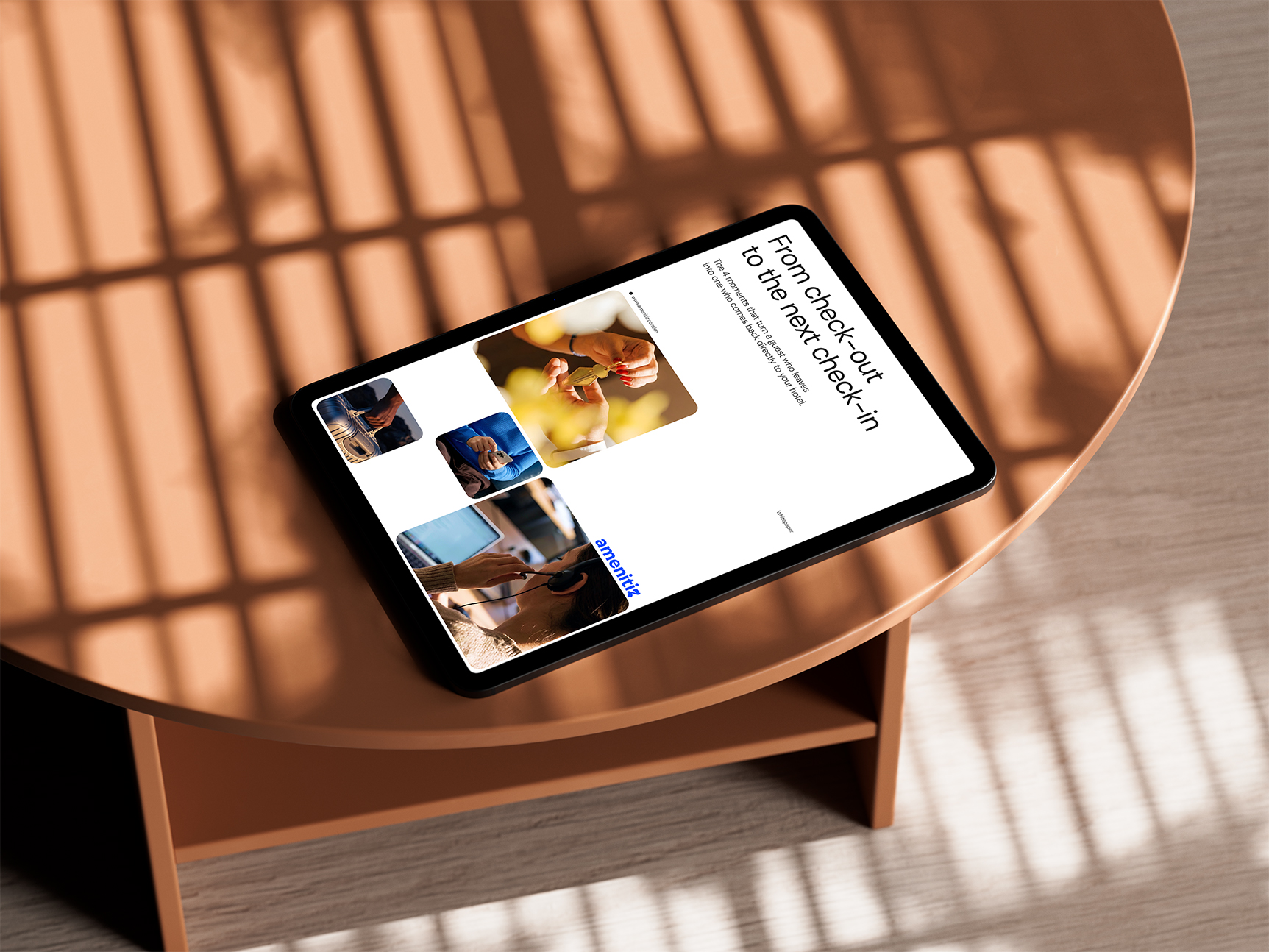
This article is a preview of what you will find in our new guide: "From check-out to the next check-in".
We will cover the following topics:
- When to ask for the review (not after check-out)
- Why responding matters as much as the review itself
- The formula to respond in less than 2 minutes
- Three real cases, from easy to hard
- When not to respond
Let's get into it:
1. When to Ask for the Review
Most hotels ask for the review after check-out, when the guest is already thinking about something else. By then, it may be too late.
- The best time is during the stay, on the second day or the second-to-last day
- Asking in person, with a card with a QR code that goes directly to your review page, takes ten seconds
- For those who don't leave it immediately, an email 2 or 3 days after check-out, with a direct link, without following up if there's no response, is enough
2. Why Responding Matters as Much as the Review Itself
A review without a response doesn't say "we missed it". It says "there's nobody on the other side". The response doesn't need to be long. It needs to be yours.
This does not mean you have to respond to absolutely every review for it to work. A Cornell study on TripAdvisor reviews found that the optimal point is around 40% of reviews responded to: going beyond 85% adds nothing extra, and can even work against you. The key is to prioritise well:
- Always prioritise negative and mixed reviews, they are the ones that carry the most weight in the booking decision
- Don't turn responding to 5-star reviews into a daily obligation if time is tight
3. The Formula to Respond in Less than 2 Minutes
Thank them, mention something specific from what they said, invite them to return, and sign with your name.
- If it's positive:
"The room had incredible views and the homemade breakfast was the best part of the trip." → "Thank you, Laura. That view of the valley is one of our favourite spots in the hotel, and we are glad the breakfast won you over, the jam is genuinely homemade. We look forward to welcoming you back."
- If it's negative:
"The air conditioning was very noisy and we barely slept." → "Hi Marc, thank you for letting us know. You are right, that unit was giving us trouble and we have already had it checked this week. We are sorry it affected your rest and would love to have another chance."
- If it's neutral:
"Everything was fine." → "Thank you for your feedback. We are glad everything went well, and we would like to share a new update: we have just opened breakfast on the second-floor terrace. On your next visit, do not miss it."
4. Three Real Cases, from Easy to Hard
Responding to a 5-star review is easy. A hotel's level shows in how it responds to the ones that sting.
- The easy review: a direct compliment about location and service. The response thanks them, repeats exactly what the guest mentioned and closes by inviting them to return.
- The mixed review: good location, but a real complaint about the view and noise. The response starts with gratitude, names the positive before addressing the negative, and goes straight to the problem without excuses.
- The hard review: an unpleasant smell in the room. The response validates the experience without minimising it, explains exactly what was done, and still closes by inviting them to return.
5. When Not to Respond
Two exceptions: abusive or threatening language (report it to the platform) and clearly fake reviews from someone who never stayed with you (report them, don't dispute them in public). Outside of that, all reviews deserve a response.
Final Thoughts on How to Respond to Reviews
Running an independent hotel in 2026 means juggling reception, housekeeping, social media and a thousand other things, all on the same day. There isn't always time to sit down and think up the perfect response to every review.
That is why Amenitiz created this free content: "From check-out to the next check-in". In addition to this chapter on reviews, it covers guest experience, social media and data, with real examples and ready-prepared instructions so that AI can help you respond to any review in seconds.
If you would like to read the full guide, you can download the free document here.