
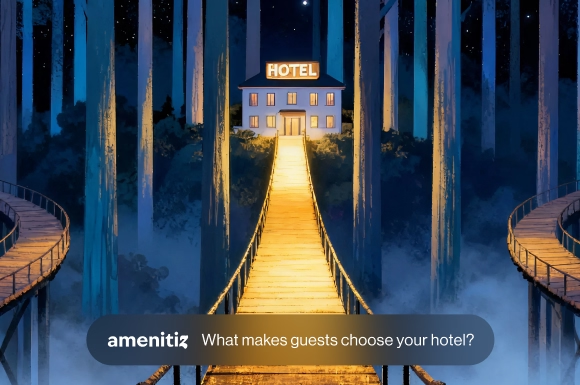

In 2026, being just "another hotel" from countless options to choose from doesn't work anymore. There are probably a dozen other hotels within a few kilometers from you, so why should guests choose you over your competitors?
Your answer can't just be "I have the best location" or "I provide comfortable rooms" because that's what every hotel is communicating to it's audience, and then you can't stand out among them.
You need that component that makes your hotel unique: The Storytelling.
Your story, your personality, and the specific experience only your hotel can offer are the pillars of your uniqueness, and they become your competitive advantage, which eventually becomes the foundation everything else is built on.
According to Gourmet Marketing, in 2026 data-driven insights into guest behavior help hoteliers tailor their marketing, services, and online presence to meet the needs of their ideal guests.
The more closely your offering aligns with what guests are searching for, the more likely they are to book your property.
Moreover, more than 90% of travelers read online reviews before booking. Today, reviews don't just live on TripAdvisor, they’re embedded in Google, Instagram, Booking.com, and even AI-generated summaries and Google’s AI Overviews.
But what's even more crucial is your brand trust, as travelers are becoming more discerning than ever, especially in a digital world where trust is easily broken. Transparency, consistency, and emotional connection build the perfect storytelling to make your hotel stand out from the crowd.
This article is a summary of Chapter 1 of our new Whitepaper: "The Independent Hotel Success Guide".
We will cover the following topics:
- Why Being "Just Another Hotel" Doesn't Work
- Your Story is Your Competitive Advantage
- Building a Brand That Stands Out
Let's get started:
Why Being "Just Another Hotel" Doesn't Work
Don't try to appeal everyone to your hotel with a generic message like "perfect for families, couples, business travellers, and groups", because then you give the impression that you don't know who your ideal customer really is.
Guests don't book generic. They book specific
They look at what everyone else is doing and try to offer the same things. Better breakfast. Nicer rooms. More amenities. But that's a race to the bottom. There will always be someone with a bigger budget who can out-amenity you.
The mistake most independent hotels make
They book the pet-friendly hotel that genuinely welcomes dogs (not just tolerates them). They book the country hotel that offers cooking classes with the owner. They book the boutique hotel that's positioned as a base for hiking enthusiasts.
The smarter approach
Find the one thing you can own. The specific niche where you're not just good, but the obvious choice.

Examples to illustrate the difference
Scenario 1: The Weekend Escape
- Generic positioning: "Charming countryside hotel"
- Specific positioning: "Your quiet escape from [nearby city] (just 40 minutes away)"
Scenario 2: The Anti-Tourist
- Generic positioning: "Beachfront hotel"
- Specific positioning: "Where locals still outnumber tourists"
Scenario 3: The Smart Base
- Generic positioning: "Beautiful views and comfortable rooms"
- Specific positioning: "The best home base for exploring the region"
Scenario 4: The Actually Central
- Generic positioning: "Hotel in the city center"
- Specific positioning: "Everything walkable (no taxis needed)"
Your Story is Your Competitive Advantage
Once you know your positioning, you need to communicate it. And the most powerful way to do that is through your story. Not a corporate "About Us" page. A real story that connects with people.
Why stories matter: "Travelers don't book just rooms. They book experiences. And experiences start with connection."
When someone reads your story and thinks "this is exactly the kind of place I want to stay," you've won. They're not comparing you to ten other hotels anymore. They've already decided.
What Makes a Good Hotel Story
It's specific, not generic
- Generic: "Family-run hotel with a tradition of hospitality since 1985"
- Specific: "I grew up in this building. My grandmother ran it as a guesthouse, and I watched her treat every guest like family. When I took over five years ago, I kept her approach: small, personal, genuine."
It explains why you do what you do
- Generic: "We're passionate about providing excellent service"
- Specific: "After years working in large hotels, I was tired of treating guests like room numbers. I wanted to create the kind of place where I'd actually want to stay: small enough to know your name, professional enough that everything works."
It connects to the guest experience
- Generic: "Located in a historic building in the city center"
- Specific: “This building was a silk merchant's house in the 1700s. You can still see the original frescoes in two of the rooms. We've kept that history alive while making sure you have everything a modern traveler needs."
Where to Tell Your Story
- Your website's About page
- Your booking confirmation emails
- In your responses to reviews
- Your social media bios
- In person when guests ask about your hotel
The more consistently you tell your story, the more it becomes part of your brand.
Building a Brand That Stands Out
Your positioning and story need to show up consistently everywhere a guest might encounter you.
Visuals
Your website, social media, printed materials, and emails should feel like they come from the same place. You don't need an expensive designer, but you do need consistency in colors, fonts, and photo style.
Tone of Voice
If your website sounds formal but your Instagram is casual and fun, that's confusing. Pick a tone that matches your positioning and stick with it.
Experiences
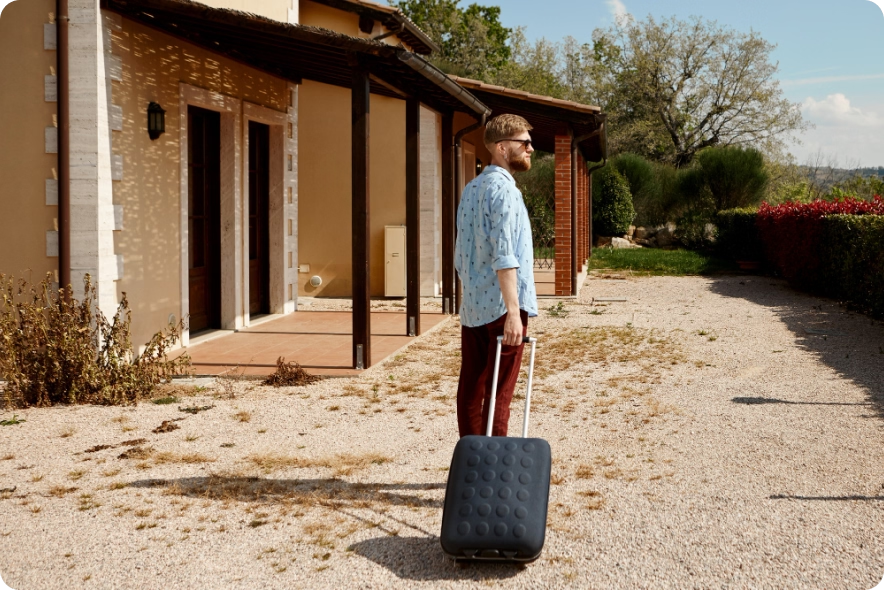
If you position yourself as "personal and welcoming," but guests arrive to find a locked door with a note saying "key under the mat," you've broken the promise. Your actual guest experience needs to match what you say about yourself.
Final Thoughts
Being an independent hotel in 2026 shouldn't mean competing on the same generic features as everyone else. When you develop a clear positioning, craft an authentic story, and build a consistent brand that resonates with your ideal guests, you stop competing on price and amenities alone: you compete on connection and experience.
The strategies outlined in this chapter, from finding your specific niche and communicating your unique story, to ensuring consistency across every guest touchpoint, provide a practical framework for transforming your hotel from just another option into the obvious choice for the right travelers.
The key is authenticity: you cannot fabricate a story or position yourself as something you're not. Your positioning must be rooted in who you genuinely are, what you truly offer, and which guests will value that most.
Remember, whilst your competitors are still trying to appeal to everyone with generic messaging about "comfortable rooms" and "great location," you can be building genuine connections with travelers who are specifically looking for what only you can offer.
Ready to define your unique positioning and craft your story?
Download the full "The Independent Hotel Success Guide" WhitePaper to access all seven chapters, including detailed positioning frameworks, storytelling templates, brand consistency checklists, and actionable strategies designed specifically for independent hoteliers who want to stand out in a crowded market.
Related read: